* Activation energy: This is the minimum amount of energy needed for a chemical reaction to start. Without enough activation energy, the molecules won't have enough energy to break their bonds and form new ones.
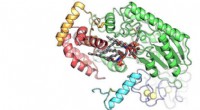
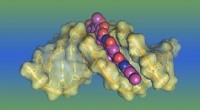
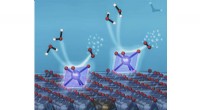
* Enzymes as catalysts: Enzymes act as biological catalysts, meaning they speed up reactions without being consumed in the process. They do this by providing an alternative pathway for the reaction with a lower activation energy.
* Safe temperature: Our body operates at a relatively low temperature (around 37°C or 98.6°F). Without enzymes, many essential chemical reactions would take place far too slowly at this temperature. Enzymes make these reactions occur at a rate suitable for life.
Here's an analogy: Imagine a ball sitting on a hill. It needs a certain amount of energy to roll down the hill. That's the activation energy. An enzyme is like building a ramp down the hill. The ball can now roll down the hill with less energy, thanks to the ramp.
In summary, enzymes don't change the temperature at which reactions happen; they make those reactions happen much faster at our body's normal temperature by lowering the activation energy needed.