Understanding the Basics
* Substitution Reaction: A substitution reaction is a chemical reaction where one functional group in a molecule is replaced by another functional group.
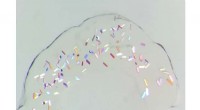
* Precipitate: A solid that forms from a solution during a chemical reaction.
Predicting Precipitation
1. Solubility Rules: The most reliable way to determine if a precipitate will form is by using solubility rules. These rules are a set of guidelines that tell you whether a compound will dissolve in water (soluble) or not (insoluble). Here's a simplified version:
* Generally Soluble:
* Group 1 cations (Li+, Na+, K+, Rb+, Cs+)
* Group 2 cations (Ca2+, Sr2+, Ba2+)
* Ammonium ion (NH4+)
* Most nitrates (NO3-)
* Most chlorides (Cl-), bromides (Br-), and iodides (I-)
* Most sulfates (SO42-)
* Generally Insoluble:
* Most carbonates (CO32-)
* Most phosphates (PO43-)
* Most sulfides (S2-)
* Most hydroxides (OH-)
2. Write the Balanced Chemical Equation: This will show you the products formed during the reaction.
3. Identify the Possible Precipitate: Look for a product that is made up of ions that are typically insoluble according to the solubility rules.
4. Consider the Concentrations: Even if a product is theoretically insoluble, it might not precipitate if its concentration is very low.
Example:
Let's say we have the following reaction:
AgNO3 (aq) + NaCl (aq) → AgCl (s) + NaNO3 (aq)
* Solubility Rules: We know that most chlorides are soluble, but AgCl is an exception and is insoluble.
* Product Identification: AgCl is the product that could potentially form a precipitate.
* Conclusion: Since AgCl is insoluble, a precipitate (solid AgCl) will form in this reaction.
Important Notes:
* Double Displacement Reactions: Substitution reactions often involve a double displacement (or metathesis) pattern, where the positive and negative ions of two reactants switch places.
* Exceptions: There are always exceptions to solubility rules, so it's essential to refer to a comprehensive list.
* Experimental Verification: While these rules can be very helpful, the best way to confirm precipitation is through experimentation. Observe if a solid forms in the reaction mixture.