Catalysts in the body are called enzymes, which are biological molecules, mostly proteins, that speed up chemical reactions without being consumed in the process. They are essential for life and perform a vast array of functions, including:
1. Digestion: Enzymes break down large food molecules into smaller ones that can be absorbed by the body. For example:
* Amylase breaks down starch into sugars in the mouth and small intestine.
* Pepsin breaks down proteins in the stomach.
* Lipase breaks down fats in the small intestine.
2. Metabolism: Enzymes control the thousands of chemical reactions that occur in cells, such as:
* Cellular respiration: Enzymes break down glucose to release energy in the form of ATP.
* DNA replication: Enzymes copy DNA molecules for cell division.
* Protein synthesis: Enzymes assemble amino acids into proteins.
3. Detoxification: Enzymes help the body break down and remove toxins, such as drugs and pollutants.
4. Immune function: Enzymes play a role in the immune system's ability to fight infections.
How Enzymes Work:
Enzymes work by lowering the activation energy of a reaction, which is the minimum energy required for the reaction to start. They do this by:
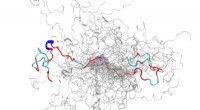
* Providing a specific binding site: Enzymes have a specific shape that allows them to bind to the reactants (substrates) of a reaction.
* Stabilizing the transition state: Enzymes interact with the substrates in a way that lowers the energy required to reach the transition state, which is the unstable state that molecules must pass through during a reaction.
Factors Affecting Enzyme Activity:
* Temperature: Each enzyme has an optimal temperature at which it works best.
* pH: Enzymes also have an optimal pH range.
* Substrate concentration: The rate of an enzyme-catalyzed reaction increases as the substrate concentration increases, up to a point.
* Inhibitors: Some molecules can bind to enzymes and inhibit their activity.
Conclusion:
Enzymes are essential catalysts that allow life to exist. They perform a wide range of functions in the body, from digesting food to fighting off infections. Understanding how enzymes work is crucial for understanding how our bodies function and for developing new treatments for diseases.