Here's how it works:
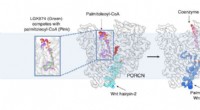
1. Substrate Binding: The organic molecule (the substrate) binds to the enzyme's active site. The active site is a specific region on the enzyme that fits the shape of the substrate.
2. Water Molecule Insertion: The enzyme facilitates the insertion of a water molecule into the bond between two parts of the substrate.
3. Bond Cleavage: The water molecule breaks the bond, separating the substrate into two smaller molecules.
4. Product Release: The two smaller molecules (the products) are released from the active site, and the enzyme is free to catalyze another reaction.
In essence, enzymes act as catalysts, speeding up the breakdown of organic molecules by lowering the activation energy required for the reaction to occur. They do this by providing a specific environment within the active site that facilitates the breaking of chemical bonds with the help of a water molecule.
Here are some examples of enzymes that use hydrolysis to break down organic molecules:
* Amylase: Breaks down starch into simpler sugars.
* Proteases: Break down proteins into amino acids.
* Lipases: Break down fats into fatty acids and glycerol.
Hydrolysis is a fundamental process in many biological systems, including digestion, metabolism, and cell signaling.