Here's why:
* Metals have relatively few electrons in their outer shell (valence electrons).
* They tend to lose these valence electrons to achieve a stable electron configuration, which is similar to that of the nearest noble gas.
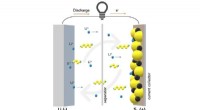
* When they lose electrons, they become positively charged ions called cations.
Examples of metals forming positive ions:
* Sodium (Na) loses one electron to become Na⁺.
* Magnesium (Mg) loses two electrons to become Mg²⁺.
* Aluminum (Al) loses three electrons to become Al³⁺.
It's important to note that there are some exceptions, and a few non-metals can also form positive ions, but they are less common.