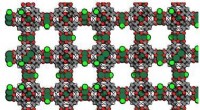
* Metallic Bonding: Metals have a unique type of bonding where the valence electrons (outermost electrons) are not tightly bound to individual atoms. Instead, they form a "sea" of delocalized electrons that can move freely throughout the entire crystal lattice.
* Electrical Conductivity: This "sea" of electrons allows for the easy flow of electric current. When an electric field is applied, these free electrons can readily move, carrying the charge throughout the material.
Examples of Metallic Crystals that Conduct Electricity:
* Copper (Cu): A highly conductive metal commonly used in electrical wiring.
* Gold (Au): Another excellent conductor, prized for its resistance to corrosion.
* Silver (Ag): The best electrical conductor among the metals, but its high cost limits its use.
* Aluminum (Al): A lightweight and relatively inexpensive conductor, often used in power lines.
Other Types of Materials and Their Conductivity:
* Insulators: Materials like glass, rubber, and plastics have tightly bound valence electrons. These electrons are not free to move, making these materials poor conductors of electricity.
* Semiconductors: Materials like silicon and germanium have a conductivity between metals and insulators. Their conductivity can be controlled by adding impurities, which makes them suitable for electronic devices.
Key Takeaway: The ability of a crystal to conduct electricity is directly related to the mobility of its valence electrons. Metals have free-moving valence electrons, making them excellent electrical conductors.