1. Concentration:
* Increasing reactant concentration: More reactant molecules mean more collisions, leading to more successful collisions and a faster reaction.
* Decreasing product concentration: Removing products as they form can shift the equilibrium towards product formation, increasing the reaction rate.
2. Temperature:
* Increasing temperature: Heat provides more kinetic energy to the molecules, making them move faster and collide more frequently and with greater force. This increases the likelihood of successful collisions.
3. Surface Area:
* Increasing surface area: For reactions involving solids, breaking the solid into smaller pieces exposes more surface area to the reactants, allowing for more collisions and faster reaction.
4. Catalysts:
* Adding a catalyst: Catalysts provide an alternative reaction pathway with a lower activation energy. This means that more molecules can overcome the energy barrier and react, speeding up the reaction without being consumed in the process.
5. Pressure:
* Increasing pressure (for gaseous reactions): This increases the concentration of reactants, leading to more frequent collisions.
6. Agitation/Stirring:
* Agitating the reaction mixture: This helps to distribute reactants evenly and bring them into contact with each other more efficiently, increasing the reaction rate.
Example:
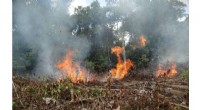
Imagine burning a piece of wood. Here's how the above factors can affect the rate of combustion:
* Concentration: More oxygen in the air will lead to faster burning.
* Temperature: A higher temperature will cause the wood to burn more quickly.
* Surface area: A pile of wood chips will burn faster than a single log due to the increased surface area.
* Catalyst: A catalyst like a metal oxide could speed up the burning process.
Important Note: Not all factors affect all reactions in the same way. For example, increasing pressure will generally increase the rate of gas-phase reactions, but it might have little effect on reactions involving liquids or solids.