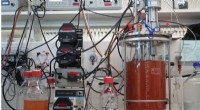
Scientific processes are the systematic methods scientists use to investigate the natural world and gain knowledge. They are not rigid steps, but rather a flexible framework that allows for creativity and adaptation. While there's no one "right" way to do science, common elements include:
1. Observation:
* Careful observation: Noticing patterns, anomalies, or phenomena in the natural world.
* Asking questions: This curiosity drives further investigation.
2. Hypothesis:
* Forming a hypothesis: Proposing a testable explanation for an observation or phenomenon.
* Making predictions: Determining what results would support or refute the hypothesis.
3. Experimentation:
* Designing and conducting experiments: Testing the hypothesis in a controlled setting, manipulating variables and gathering data.
* Collecting and analyzing data: Organizing, summarizing, and interpreting the results.
4. Interpretation and Conclusion:
* Drawing conclusions: Evaluating whether the data supports or refutes the hypothesis.
* Communicating results: Sharing findings through scientific publications, presentations, and discussions.
5. Peer Review:
* Submitting work for review by other scientists: Ensuring rigor, validity, and reproducibility of the findings.
6. Iteration and Refinement:
* Repeating experiments, modifying the hypothesis, or developing new ones: The scientific process is iterative, continually building upon and refining knowledge.
Important Considerations:
* Objectivity: Striving to remain unbiased and focused on evidence.
* Falsifiability: A hypothesis must be able to be proven wrong.
* Reproducibility: Experiments should be able to be replicated by other scientists.
* Collaboration: Science is a collaborative effort, with scientists sharing ideas and building upon each other's work.
Beyond the "Scientific Method":
* Other scientific processes: Scientists also employ methods like modeling, simulations, and analysis of existing data (observational studies).
* Interdisciplinary approach: Many scientific investigations involve multiple disciplines, fostering collaboration and a deeper understanding of complex phenomena.
The scientific process is a dynamic and ever-evolving framework that continues to shape our understanding of the world.