Homogeneous Mixtures
* Uniform Composition: The components are evenly distributed throughout the mixture.
* Single Phase: The mixture appears as a single, uniform substance. You can't see individual components.
* Examples: Saltwater, air, sugar dissolved in water.
Heterogeneous Mixtures
* Non-Uniform Composition: The components are not evenly distributed.
* Multiple Phases: You can see distinct components or layers.
* Examples: Sand and water, oil and water, salad dressing.
Here are some key points to remember:
* Visual Inspection: Often, you can tell by looking. Do you see different components?
* Separation: Can you easily separate the components? If so, it's likely heterogeneous.
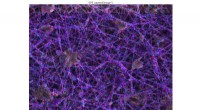
* Microscopic Level: Sometimes, a mixture might appear homogeneous to the naked eye, but it's heterogeneous at the microscopic level. For example, milk may appear uniform, but under a microscope, you can see tiny fat droplets suspended in water.
Let me know if you'd like to explore examples of specific mixtures!