1. Atomic Structure:
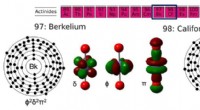
* Electrons in Orbitals: Atoms consist of a positively charged nucleus surrounded by negatively charged electrons that occupy specific energy levels, known as orbitals. Each orbital corresponds to a particular energy state.
* Quantum Mechanical Model: The behavior of electrons is governed by the principles of quantum mechanics. Electrons exist in quantized energy states, meaning they can only occupy discrete energy levels.
* Energy Level Transitions: When an electron absorbs energy (e.g., from heat or light), it can jump to a higher energy level. When it returns to a lower energy level, it releases the excess energy as a photon of light.
2. Atomic Spectra:
* Emission Spectra: When atoms are excited, they emit light at specific wavelengths. This creates a characteristic pattern of bright lines known as an emission spectrum.
* Absorption Spectra: When light passes through a sample of atoms, certain wavelengths are absorbed by the atoms, causing a pattern of dark lines in the spectrum.
* Spectral Lines and Energy Levels: The wavelengths of the emitted or absorbed light correspond to the energy differences between the electron energy levels.
Connection:
The relationship lies in the fact that atomic spectra are a direct consequence of the quantized energy levels of electrons within an atom.
* Each spectral line corresponds to a specific energy transition between two electron energy levels.
* The pattern of spectral lines is unique for each element, allowing us to identify elements based on their spectra.
Example:
The bright red line in the hydrogen spectrum corresponds to the transition of an electron from the third energy level (n=3) to the second energy level (n=2). This transition emits a photon with a specific energy, corresponding to the wavelength of red light.
In summary:
Atomic spectra arise from the quantized energy levels of electrons in atoms. The pattern of spectral lines is determined by the specific energy transitions that electrons can undergo. This relationship allows us to study the structure of atoms by analyzing their spectra.