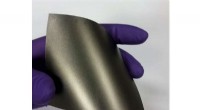
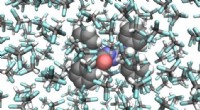
* Crystalline solids have a highly ordered, repeating arrangement of atoms or molecules. This gives them a well-defined, geometric shape and often makes them brittle. Examples include salt, diamond, and quartz.
* Amorphous solids lack this long-range order. Their atoms or molecules are arranged randomly. This makes them less brittle and more flexible.
Rubber is a polymer with long, chain-like molecules that are tangled and cross-linked. This random arrangement gives rubber its flexibility and elasticity.
Glass is a supercooled liquid, meaning it has the viscosity of a solid but lacks the long-range order of a true crystal.
So, while both rubber and glass are solids, they are not crystalline solids.