Here's why:
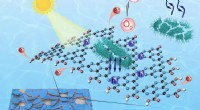
* Structure: Graphite has a layered structure where each layer consists of carbon atoms arranged in a hexagonal lattice. Within each layer, the carbon atoms are strongly bonded together through covalent bonds, forming a network of delocalized electrons.
* Delocalized Electrons: These delocalized electrons are free to move throughout the layers, enabling the flow of electrical current.
* Weak Interlayer Bonding: The layers in graphite are held together by weak van der Waals forces. This allows the layers to slide past each other, giving graphite its characteristic slipperiness and making it a good lubricant.
Other allotropes of carbon and their conductivity:
* Diamond: Diamond has a very rigid, three-dimensional structure with strong covalent bonds. This structure does not allow for free electron movement, making diamond an excellent insulator.
* Fullerene: Fullerenes are cage-like structures with a closed network of carbon atoms. While they can exhibit some electrical conductivity, it is significantly lower than graphite.
* Carbon nanotubes: Carbon nanotubes are cylindrical structures of rolled-up graphene sheets. They can exhibit excellent electrical conductivity depending on their structure and properties.
Therefore, while other allotropes of carbon may have some conductive properties, graphite is the only allotrope that is considered a decent conductor of electricity due to its unique structure and delocalized electrons.