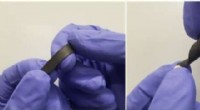
Here's how it works:
* Metals: Elements located to the left of the stair-step line are considered metals. They typically have:
* Shiny appearance
* Good conductors of heat and electricity
* Malleable (can be hammered into sheets)
* Ductile (can be drawn into wires)
* Nonmetals: Elements located to the right of the stair-step line are considered nonmetals. They typically have:
* Dull appearance
* Poor conductors of heat and electricity
* Brittle (break easily)
* Metalloids (Semimetals): The elements that lie along the stair-step line are called metalloids. They have properties of both metals and nonmetals.
Example:
Imagine a periodic table. The stair-step line starts at Boron (B) and zigzags down to Polonium (Po).
* Elements to the left of this line: Sodium (Na), Iron (Fe), Copper (Cu) - These are all metals.
* Elements to the right of this line: Oxygen (O), Sulfur (S), Chlorine (Cl) - These are all nonmetals.
* Elements on the stair-step line: Silicon (Si), Arsenic (As), Germanium (Ge) - These are metalloids.