Here's why:
* Distilled water is essentially colorless and transparent. It doesn't have any impurities that would create a color.
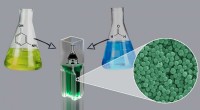
* Reagents are chemicals that can react with water. The reaction can create a colored compound.
* The color change depends on the specific reagent. Some reagents might cause the solution to turn red, others green, blue, or even stay clear.
Examples:
* Phenolphthalein: This indicator turns pink in basic solutions (alkaline).
* Litmus paper: This indicator turns red in acidic solutions and blue in basic solutions.
* Methyl orange: This indicator turns red in acidic solutions and yellow in basic solutions.
Important Note:
* The color change of distilled water with a reagent is a chemical reaction. It can be used to identify the presence of certain substances in the water.
* It's important to note that distilled water is very pure and may not react with all reagents. Some reagents might require impurities or other conditions to produce a color change.
To understand how a reagent might affect distilled water, you need to know the specific reagent and its properties.