Here's a breakdown:
* Exposed to atmosphere: This means the surface is not confined by a container wall.
* Constant pressure: The pressure at all points on the free surface is the same. This is because the pressure at a point in a liquid is due to the weight of the liquid above it, and the weight of the air above the surface is negligible.
* Perpendicular to gravity: The free surface is always perpendicular to the direction of the gravitational force. This is why a liquid in a container forms a flat surface.
Key features of the free surface:
* Surface tension: The free surface exhibits surface tension, which is the tendency of a liquid to minimize its surface area. This results in the formation of spherical droplets and explains why small insects can walk on water.
* Capillary action: The free surface is also affected by capillary action, which is the rise or fall of a liquid in a narrow tube or porous material due to the interaction between the liquid and the surface of the container.
* Meniscus: The free surface of a liquid in a container can form a curved shape called a meniscus. The meniscus is concave for liquids that are attracted to the container walls (e.g., water in a glass tube) and convex for liquids that are repelled by the walls (e.g., mercury in a glass tube).
Examples of free surfaces:
* The surface of water in a lake or ocean
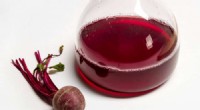
* The surface of a liquid in a beaker
* The surface of a raindrop
* The surface of a soap bubble
Understanding the free surface is important in many fields, including fluid mechanics, surface chemistry, and materials science.