Here's a breakdown:
* Solids: Have a fixed shape and volume. Atoms are tightly packed and vibrate in place.
* Liquids: Have a fixed volume but can change shape. Atoms are less tightly packed and can move around.
* Gases: Have no fixed shape or volume. Atoms are widely spaced and move freely.
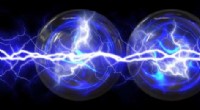
* Plasma: A gas that has been ionized, meaning its atoms have lost or gained electrons, resulting in free-moving charged particles. This gives plasma unique properties:
* Conductivity: Plasma conducts electricity due to the presence of charged particles.
* Magnetic Fields: Plasma interacts with magnetic fields, leading to phenomena like aurora borealis.
* High Energy: Plasma can carry a lot of energy.
* Variable Density: Plasma can be very dense, like in the sun's core, or very diffuse, like in the upper atmosphere.
Why the Confusion?
Plasma can sometimes behave in ways that remind us of solids and liquids, but these are analogies, not literal states.
* Solid-like: Plasma can be confined by magnetic fields, giving it a kind of "shape" in the same way a solid has a shape.
* Liquid-like: Plasma can flow and move like a liquid, especially when it's not confined.
In Summary
Plasma is a distinct state of matter with its own unique properties. While it might sometimes seem like it shares characteristics with solids or liquids, it's important to remember that it's not a combination of the two.