* Density is the key: Ice floats because it's *less dense* than liquid water.
* Water's unusual behavior: Water is one of the few substances that is less dense in its solid form (ice) than in its liquid form. Most substances become denser when they freeze.
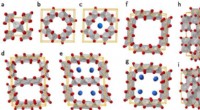
* Molecular structure: The reason for this lies in the way water molecules arrange themselves. In liquid water, molecules can pack relatively closely together. But when water freezes, the molecules form a crystal lattice structure with empty spaces. This structure makes ice less dense than liquid water.
Think of it this way:
* If you had a bucket full of marbles and poured water into it, the water would fill in the spaces between the marbles.
* Ice is like a bucket full of marbles with even *more* empty space between them, making it lighter than the same volume of water.
Therefore, since ice is less dense than water, it displaces a volume of water equal to its own weight, which is enough to keep it afloat.