Here's a breakdown:
* UV radiation: UV light carries energy that falls within a specific range of wavelengths, shorter than visible light but longer than X-rays.
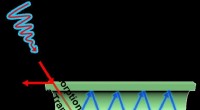
* Electronic transitions: Atoms and molecules have distinct energy levels for their electrons. When UV photons interact with these species, the energy of the photon can be absorbed by an electron, causing it to jump to a higher energy level. This process is called an electronic transition.
Types of Electronic Transitions:
* σ → σ* transitions: Occur between bonding (σ) and antibonding (σ*) molecular orbitals. These transitions require high energy and are typically observed in the far-UV region (<200 nm).
* π → π* transitions: Occur between pi (π) bonding and antibonding (π*) orbitals. These transitions are lower in energy and often responsible for UV absorption in the near-UV region (200-400 nm).
* n → π* transitions: Occur between non-bonding (n) orbitals and π* antibonding orbitals. These transitions are the lowest in energy and often observed in the near-UV region.
Factors Affecting UV Absorption:
* Chromophore: The specific group of atoms within a molecule responsible for absorbing UV light.
* Auxochrome: A group that, when attached to a chromophore, can enhance or modify the absorption of UV light.
* Conjugation: The presence of alternating single and double bonds in a molecule, which lowers the energy required for electronic transitions and shifts absorption to longer wavelengths.
Applications of UV Absorption:
* Spectroscopy: UV-Vis spectroscopy is a technique used to identify and quantify compounds based on their UV absorption patterns.
* Sunscreens: Many sunscreens contain compounds that absorb UV radiation, protecting skin from harmful effects.
* Photochemistry: UV absorption plays a key role in many photochemical reactions, such as photosynthesis.
In summary, UV absorption is driven by electronic transitions within atoms and molecules, where electrons are excited to higher energy levels by the energy of UV photons. Understanding these transitions and the factors influencing them is crucial for various applications in chemistry, biology, and materials science.