Here's how it works:
1. The Paper's Composition: PH paper is impregnated with a chemical indicator, typically a weak acid or base. These indicators have different colored forms depending on the pH of the solution.
2. Contact with the Solution: When you dip PH paper into a solution, the indicator reacts with the hydrogen ions (H+) or hydroxide ions (OH-) present in the solution.
3. Color Change: The reaction causes the indicator to change color. This color change is specific to a certain pH range.
4. Comparing to the Chart: You then compare the color of the PH paper to a chart provided with the paper. The chart correlates specific colors with corresponding pH values.
Types of PH Paper:
* Universal PH Paper: This type covers a wider pH range (usually 0-14) and has multiple color changes, making it more versatile.
* Specific PH Paper: Some papers are designed to test a narrower pH range, like 1-3 or 8-11, providing more precise measurements within that range.
Example:
Let's say you dip PH paper into a solution and it turns red. According to the chart, a red color indicates a pH of around 1-2, meaning the solution is highly acidic.
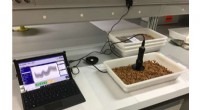
Important Note: PH paper is a qualitative test, meaning it gives you a general idea of the acidity or alkalinity. For more precise measurements, you would use a pH meter.