Here's a breakdown:
* Dissolve: The substance breaks down into individual molecules or ions, spreading evenly throughout the water.
* Homogeneous solution: The resulting mixture has a uniform composition throughout. It looks like a single substance, not a mixture of separate parts.
Why does some stuff dissolve in water, and some doesn't?
The ability of a substance to dissolve in water depends on its chemical properties:
* Polarity: Water is a polar molecule, meaning it has a positive and negative end. Substances with similar polarity (like sugar) will dissolve well in water because the positive ends of water molecules can attract the negative ends of the sugar molecules, and vice versa.
* Intermolecular forces: The strength of the forces between water molecules and the substance's molecules determines how readily it dissolves. Stronger forces lead to better solubility.
* Ionic compounds: Many ionic compounds (like table salt) dissolve in water because the water molecules can surround and pull apart the ions.
Examples of water-soluble substances:
* Sugar
* Salt
* Alcohol
* Vinegar
* Many vitamins
Examples of substances that are not water-soluble:
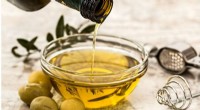
* Oil
* Sand
* Plastic
* Fats
Key takeaway: Water solubility is a fundamental concept in chemistry, playing a crucial role in many natural and industrial processes.