Solutions
* Definition: A homogeneous mixture where one substance (the solute) is dissolved evenly throughout another substance (the solvent).
* Particle Size: The solute particles are incredibly small, usually at the atomic or molecular level (less than 1 nanometer in diameter).
* Appearance: Solutions are transparent, meaning you can see through them.
* Separation: The solute particles do not settle out over time.
* Examples: Saltwater, sugar dissolved in water, air (a mixture of gases)
Colloids
* Definition: A heterogeneous mixture where particles are dispersed throughout a medium but are larger than those in a solution and smaller than those in a suspension.
* Particle Size: Particles are larger than in solutions (1-1000 nanometers in diameter), but still too small to be seen with the naked eye.
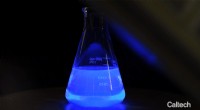
* Appearance: Colloids can appear cloudy or opaque, but they scatter light, a phenomenon known as the Tyndall Effect.
* Separation: The particles do not settle out easily, but they might separate over long periods.
* Examples: Milk, fog, paint, blood
Suspensions
* Definition: A heterogeneous mixture where particles are large enough to be seen with the naked eye and will settle out over time.
* Particle Size: Particles are much larger than in colloids (greater than 1000 nanometers in diameter).
* Appearance: Suspensions are usually cloudy or opaque and the particles are visible.
* Separation: The particles will settle to the bottom due to gravity.
* Examples: Muddy water, sand in water, flour in water
Here's a helpful table summarizing the key differences:
| Feature | Solution | Colloid | Suspension |
|--------------|----------|---------|-------------|
| Particle Size | Very Small | Small | Large |
| Appearance | Transparent | Cloudy or opaque | Cloudy or opaque |
| Separation | No | No (but may separate slowly) | Yes |
| Tyndall Effect | No | Yes | Yes |
Key Takeaway: The main difference lies in the size of the particles and how they behave. Solutions have the smallest particles, followed by colloids, and then suspensions.