* Metals: like zinc and copper in a simple battery.
* Metal alloys: combinations of metals.
* Other conductive materials: like carbon, graphite, or even certain metal oxides.
Here's how it works:
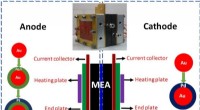
1. Electrodes: The battery contains two electrodes, an anode (negative) and a cathode (positive).
2. Electrolyte: The electrodes are immersed in an electrolyte, a solution that conducts electricity. This solution can be an acid, base, or a salt.
3. Chemical Reaction: A chemical reaction occurs between the electrodes and the electrolyte. This reaction causes electrons to flow from the anode to the cathode through an external circuit.
4. Current Flow: The movement of these electrons creates an electric current that can power devices.
Simplified example:
In a simple battery, like a zinc-copper battery, the chemical reaction involves:
* Anode (zinc): Zinc atoms lose electrons and become zinc ions (Zn²⁺). These ions dissolve into the electrolyte.
* Cathode (copper): Copper ions in the electrolyte gain electrons and become copper atoms, plating onto the copper electrode.
This flow of electrons from the anode to the cathode creates the electric current.
Key point: The specific metals used in a battery determine the voltage and other properties of the battery.