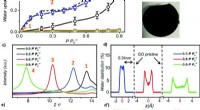
* Absorption and Scattering of Light: Water absorbs red wavelengths of light more strongly than blue wavelengths. This means that blue light is reflected back more, making the water appear blue.
* Particles in the Water: Water can contain small particles like sediment, algae, or dissolved minerals, which can also contribute to its color.
So, while water itself is colorless, we often perceive it as blue because of how it interacts with light.