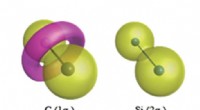
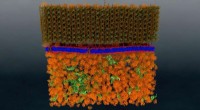
Atoms break their existing bonds and form new ones with other atoms to create new molecules.
Let's break it down:
* Atoms are the fundamental building blocks of matter.
* Bonds are the forces that hold atoms together. There are different types of bonds, but the most common are covalent bonds (where atoms share electrons) and ionic bonds (where atoms gain or lose electrons).
* Molecules are formed when two or more atoms bond together.
Here's an example:
Imagine you have two separate LEGO pieces (atoms). They have little bumps and holes (bonds) that allow them to connect to other pieces. When you connect the two pieces, you've formed a new LEGO structure (a molecule).
Here's the important part: When atoms bond, they don't disappear or change into other atoms. They simply rearrange themselves to form new structures with different properties.
Chemical Reactions: This process of breaking and forming bonds is called a chemical reaction. These reactions happen all the time in the world around us, from cooking food to digesting it, and even in the air we breathe.
Let me know if you have any other questions!