However, the statement that they don't interact chemically is not entirely accurate. While they are indeed very unreactive, they do exhibit a few types of chemical interactions:
1. Weak Interatomic Interactions:
* Van der Waals forces: These are weak, temporary attractions arising from fluctuations in electron distribution around atoms. They play a role in the liquefaction and solidification of noble gases at very low temperatures.
* Dipole-induced dipole interactions: These occur when a polar molecule induces a temporary dipole in a non-polar noble gas atom.
2. Rare Compounds:
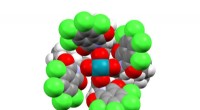
* Xenon fluorides: Xenon, the largest and most reactive noble gas, forms compounds with fluorine, such as XeF2, XeF4, and XeF6. These compounds are formed under extreme conditions (high temperatures, pressures, or the presence of strong oxidizers).
* Other compounds: A few other noble gas compounds have been synthesized, including XeO2, XeO3, XeO4, KrF2, and Na2He. These are extremely unstable and require specific conditions for their formation.
3. Exotic Interactions:
* Exciplexes: These are excited state complexes formed by the interaction of a noble gas atom with an excited molecule. These interactions are short-lived and often studied in the context of lasers and other light-emitting technologies.
Overall, noble gases are primarily known for their lack of reactivity. However, they do exhibit some weak interatomic interactions and can form rare, unstable compounds under specific conditions.
It's worth noting that our understanding of noble gas chemistry is continually evolving, and new discoveries and advancements in synthetic techniques may lead to the identification of more noble gas compounds and interactions in the future.