* Atom: The smallest unit of an element that retains the chemical properties of that element. Atoms are made up of a nucleus containing protons and neutrons, surrounded by a cloud of electrons. They are the building blocks of everything around us. Examples: hydrogen (H), oxygen (O), carbon (C).
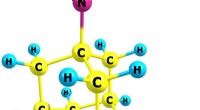
* Molecule: A group of two or more atoms held together by chemical bonds. Molecules can be made of the same type of atom (like oxygen gas, O2) or different types of atoms (like water, H2O). They form when atoms share or transfer electrons, creating a stable arrangement.
Here's a simple analogy:
Think of Legos.
* Atoms: Individual Lego bricks, representing the basic building blocks.
* Molecules: Structures built by connecting multiple Lego bricks together, creating something more complex than a single brick.
In summary:
| Feature | Atom | Molecule |
|--------------|---------------------------------------|------------------------------------------|
| Composition | Smallest unit of an element | Two or more atoms bonded together |
| Complexity | Basic building block | More complex structure than a single atom |
| Example | Hydrogen (H), Oxygen (O), Carbon (C) | Water (H2O), Oxygen gas (O2) |