Here's why:
* Reactants: These are the starting materials in a chemical reaction. They are written on the left side of the equation, separated by a plus sign (+).
* Products: These are the substances formed as a result of the chemical reaction. They are written on the right side of the equation, also separated by a plus sign (+).
* Arrow: The arrow (→) in the middle of the equation indicates the direction of the reaction, from reactants to products.
Example:
```
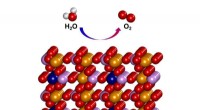
2 H₂ + O₂ → 2 H₂O
```
In this equation:
* Reactants: Hydrogen (H₂) and Oxygen (O₂)
* Products: Water (H₂O)
Key Points:
* The products are always on the right side of the arrow.
* The number of molecules of each product is indicated by the coefficient in front of its chemical formula. In the example above, there are two molecules of water (2 H₂O).
Note: Some chemical equations might show a reversible reaction with a double arrow (⇌). In this case, both sides of the equation can be considered as products and reactants depending on the direction of the reaction.