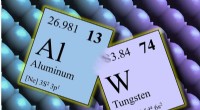
Dmitri Mendeleev is credited with creating the first periodic table in 1869. He arranged the elements in order of increasing atomic weight and noticed that elements with similar properties appeared at regular intervals. This led him to formulate his periodic law, which states that the properties of the elements are a periodic function of their atomic weights.
Here are some key points about the periodic table:
* Organization: It is organized into rows called periods and columns called groups.
* Atomic Number: Elements are arranged in order of increasing atomic number, which is the number of protons in an atom's nucleus.
* Electron Configuration: Elements in the same group have similar electron configurations, leading to similar chemical properties.
* Trends: The periodic table exhibits several trends, such as electronegativity, ionization energy, and atomic radius, which can be used to predict the behavior of elements.
Over time, the periodic table has been refined and expanded as new elements have been discovered. Today, it is an essential tool for chemists, physicists, and other scientists.