Decay chains, also known as radioactive decay series, are crucial in understanding the behavior of radioactive isotopes. They play a significant role in various fields, including:
1. Nuclear Physics and Chemistry:
* Predicting the products of radioactive decay: By understanding the decay chain, we can predict which daughter isotopes will be produced after a radioactive decay event.
* Determining the half-life of isotopes: The decay chain provides information about the half-life of each isotope in the series, helping us understand their stability and rate of decay.
* Studying the properties of different isotopes: Decay chains provide insights into the energy levels, nuclear structure, and other properties of isotopes within the series.
2. Geology and Geochronology:
* Dating rocks and minerals: Isotopes with long half-lives, such as uranium-238 and potassium-40, are used in radiometric dating to determine the age of geological formations.
* Understanding the evolution of the Earth: Decay chains contribute to the understanding of the Earth's composition and the processes that have shaped it over billions of years.
* Exploring the origins of the solar system: Studying the decay chains of elements found in meteorites and lunar samples provides insights into the formation of our solar system.
3. Environmental Science:
* Tracing the movement of radioactive materials: Decay chains are used to track the movement and distribution of radioactive elements in the environment, such as after a nuclear accident or in naturally occurring radioactive materials.
* Monitoring pollution: Some radioactive isotopes, like carbon-14, are used to trace the movement of pollutants and assess the impact of human activities on the environment.
4. Medical Science and Technology:
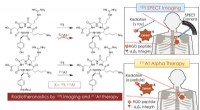
* Developing medical treatments: Certain radioactive isotopes, often produced through decay chains, are used in medical imaging and treatment modalities like PET scans and radiation therapy.
* Creating new materials: By manipulating decay chains, scientists can create new materials with specific properties, potentially leading to advancements in various fields.
5. Nuclear Energy:
* Understanding the behavior of nuclear fuel: Decay chains are vital in understanding the behavior of nuclear fuel and the production of radioactive waste in nuclear reactors.
* Managing nuclear waste: Decay chains are crucial in predicting the long-term behavior and potential hazards of radioactive waste from nuclear power plants and other nuclear activities.
In summary, decay chains are essential for understanding the behavior of radioactive isotopes and their applications in various scientific fields. They provide valuable information for nuclear physics, geology, environmental science, medicine, and nuclear energy, contributing significantly to our knowledge and progress in these areas.