Here's why:
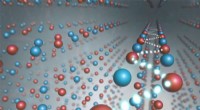
* Electron Transfer: Ionic bonding involves the complete transfer of one or more electrons from one atom to another. The atom that loses an electron becomes positively charged (a cation), and the atom that gains an electron becomes negatively charged (an anion).
* Electrostatic Attraction: The opposite charges of the cation and anion attract each other strongly, forming the ionic bond.
Example:
Sodium (Na) has one electron in its outer shell, while chlorine (Cl) has seven. When sodium reacts with chlorine, sodium loses its outer electron to chlorine. This creates a sodium ion (Na+) and a chloride ion (Cl-). The strong electrostatic attraction between these ions forms an ionic bond, resulting in the compound sodium chloride (NaCl), commonly known as table salt.