Here's how it works:
1. Light-dependent reactions:
- Sunlight is absorbed by chlorophyll in the chloroplasts of plant cells.
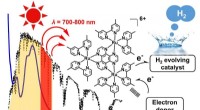
- This energy is used to split water molecules into oxygen (O₂), hydrogen ions (H+), and electrons.
- The oxygen is released as a byproduct, while the hydrogen ions and electrons are used in the next step.
2. Light-independent reactions (Calvin cycle):
- The hydrogen ions and electrons are used to reduce carbon dioxide (CO₂) into glucose (C₆H₁₂O₆).
- The energy for this reduction comes from ATP and NADPH, which are produced in the light-dependent reactions.
In essence, the hydrogen and electrons in glucose originate from the water molecules that are split during photosynthesis.
Simplified representation:
6CO₂ + 6H₂O + light energy → C₆H₁₂O₆ + 6O₂
This equation shows that 6 molecules of carbon dioxide and 6 molecules of water react in the presence of light energy to produce 1 molecule of glucose and 6 molecules of oxygen. The hydrogen and electrons from water are incorporated into the glucose molecule.