Reaction:
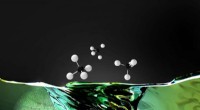
Curium reacts with water to form curium hydroxide (Cm(OH)3) and hydrogen gas (H2). The reaction can be represented as:
2 Cm + 6 H2O → 2 Cm(OH)3 + 3 H2
Key points:
* Highly reactive: Curium is extremely reactive with water due to its high electronegativity and its tendency to lose electrons.
* Exothermic: The reaction releases a significant amount of heat, making it highly dangerous.
* Hydrogen gas production: The release of hydrogen gas is a major safety concern, as it is highly flammable and can form explosive mixtures with air.
* Radioactive hazards: Curium is highly radioactive, and its reaction with water can lead to the release of radioactive particles into the environment.
Safety:
Due to the extreme reactivity and radioactive nature of curium, it is essential to handle it with utmost caution in a controlled environment. Special equipment and procedures are required to safely handle and store this element.
In summary:
Curium's reaction with water is a highly dangerous process due to its vigorous nature, exothermic heat production, hydrogen gas generation, and radioactive hazards.