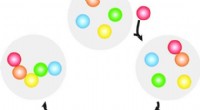
* Evaporation: This is the process where liquid water absorbs enough energy (usually heat) to break the bonds holding it together and transform into water vapor (a gas). This happens naturally at the surface of any body of water, and even on damp surfaces.
* Boiling: This is a special case of evaporation where the water is heated to its boiling point (100 degrees Celsius or 212 degrees Fahrenheit at standard pressure). At this point, the water molecules have enough energy to rapidly escape the liquid and form bubbles of steam.
So, water becomes a gas when it absorbs enough energy to break the bonds holding it together, and this can happen through evaporation or boiling.