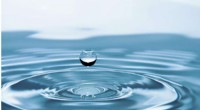
* Polarity: Water molecules are polar, meaning they have a slightly positive end (hydrogen) and a slightly negative end (oxygen). This allows water to interact with and dissolve other polar molecules, like salts and sugars.
* Hydrogen Bonding: Water molecules form strong hydrogen bonds with each other, which also contribute to its ability to dissolve polar molecules.
* High Dielectric Constant: Water has a high dielectric constant, meaning it weakens the electrostatic forces between ions in a solute, making it easier for them to separate and dissolve.
However, water doesn't dissolve everything:
* Nonpolar molecules: Water is a poor solvent for nonpolar molecules like oils and fats. These molecules lack the charge separation that allows them to interact with water's polar molecules.
* Some ionic compounds: Certain ionic compounds, like silver chloride, are very poorly soluble in water.
Therefore, water is a good solvent for many things but not everything. It's more accurate to say that water is a versatile solvent, rather than a universal one.