1. Vesicle Formation and Assembly:
* Nuclear membrane fragments: The existing nuclear membrane breaks down during prophase and metaphase, forming small membrane-bound vesicles scattered throughout the cytoplasm.
* Vesicles gather: These vesicles, containing integral membrane proteins and nuclear pore complexes, begin to cluster around the condensed chromosomes.
* Microtubules guide: Microtubules, which were responsible for separating chromosomes during anaphase, also contribute to the arrangement of these vesicles.
2. Nuclear Envelope Reformation:
* Vesicle fusion: The clustered vesicles fuse together, forming a continuous membrane around the chromosomes.
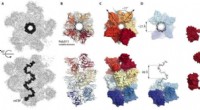
* Nuclear pore complex assembly: As the membrane reforms, nuclear pore complexes (NPCs), which control the passage of molecules between the nucleus and cytoplasm, assemble within the membrane.
* Chromatin decondensation: As the nuclear membrane forms, the chromosomes begin to decondense, becoming less tightly packed.
3. Nuclear Lamina Formation:
* Lamin protein assembly: Lamin proteins, which form the structural support for the nuclear envelope, start assembling along the inner surface of the reforming nuclear membrane.
* Nuclear shape establishment: The lamin proteins help establish the shape and rigidity of the nucleus.
It's important to remember that these processes are intertwined and occur concurrently, leading to the formation of a functional new nuclear envelope.