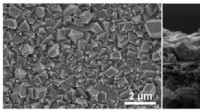
1. Crystalline Solids:
* Have a highly ordered, repeating three-dimensional arrangement of atoms, ions, or molecules.
* This ordered structure gives them specific shapes and melting points.
* Examples: table salt (NaCl), diamonds, ice, metals
2. Amorphous Solids:
* Lack a long-range, ordered structure.
* Their atoms are arranged randomly.
* They often lack a specific melting point and soften gradually over a range of temperatures.
* Examples: glass, rubber, plastics, wax
There's also a third, less common category:
3. Quasi-Crystalline Solids:
* These have a highly ordered structure, but it does not repeat in a simple, periodic way.
* Their atoms form complex, non-repeating patterns.
* Examples: some alloys
So, to answer your question directly, the vast majority of solids fall into the categories of crystalline and amorphous.