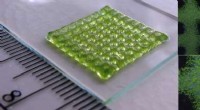
1. Recrystallization:
* Principle: This is the most common method. It takes advantage of the different solubilities of KCl and impurities in various solvents, typically water.
* Process:
* Dissolve the impure KCl in hot water. Most impurities will also dissolve, but to a lesser extent than KCl.
* Cool the solution slowly. As the temperature drops, KCl's solubility decreases, causing it to crystallize out while most impurities remain dissolved.
* Filter the crystals and wash them with cold water to remove residual impurities.
* The crystals can be further purified by repeating the process.
2. Fractional Crystallization:
* Principle: Similar to recrystallization, but utilizes differences in solubility between KCl and other salts present in the mixture.
* Process:
* Dissolve the impure KCl in a suitable solvent (e.g., water) at a specific temperature.
* As the solution cools, different salts will precipitate out at different temperatures, allowing for their separation.
* Careful control of temperature and solution concentration can achieve high purity.
3. Solvent Extraction:
* Principle: Selectively dissolves KCl into a solvent that leaves behind impurities.
* Process:
* Mix the impure KCl with a solvent that dissolves KCl but not impurities (e.g., ethanol).
* Separate the two layers. The KCl will be in the solvent layer, while the impurities will remain in the original phase.
* Evaporate the solvent to recover the purified KCl.
4. Ion Exchange Chromatography:
* Principle: Separates ions based on their affinity for a stationary phase.
* Process:
* Pass a solution of impure KCl through a column packed with an ion exchange resin.
* The resin selectively binds to specific ions, separating KCl from impurities.
* Elute KCl from the column using a suitable solution.
5. Vacuum Evaporation:
* Principle: Removes water from a KCl solution, leaving behind solid KCl.
* Process:
* Heat a KCl solution under reduced pressure.
* The water evaporates faster at lower pressure, leaving behind concentrated KCl.
* This process is usually done in conjunction with other purification methods to remove impurities.
Choice of Method:
The best purification method depends on the nature of the impurities present and the desired purity level. Recrystallization is often the most cost-effective and suitable for general purification, while more specialized techniques like ion exchange chromatography might be necessary for very high purity applications.