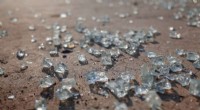
1. Ionic compounds: These compounds are made up of positively charged ions (cations) and negatively charged ions (anions) held together by electrostatic attraction. When these compounds are placed in water, the polar water molecules surround the ions and pull them apart, breaking the ionic bonds and dissolving the compound. Examples include table salt (NaCl), potassium chloride (KCl), and sodium hydroxide (NaOH).
2. Polar covalent compounds: These compounds are made up of atoms that share electrons unequally, creating a separation of charge within the molecule. The polar water molecules can interact with the charged regions of the polar molecule, pulling it apart and dissolving it. Examples include sugar (sucrose), ethanol, and acetic acid.
It's important to note that some materials, like oil, are nonpolar and won't dissolve in water. This is because the water molecules can't interact with the nonpolar molecules effectively.