What Happens to Water Molecules When Irradiated?
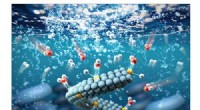
When water molecules (H₂O) are exposed to ionizing radiation (like X-rays, gamma rays, or high-energy particles), they can absorb energy and undergo several changes:
1. Ionization: This is the most significant event. The radiation can knock an electron out of a water molecule, leaving it positively charged (H₂O⁺). This process creates a free radical, a highly reactive species with an unpaired electron.
2. Excitation: Instead of ejecting an electron, the radiation can energize the molecule, moving its electrons to higher energy levels. This excited state is temporary, and the molecule will eventually return to its ground state, releasing energy in the form of heat or light.
3. Radiolysis: The combined effect of ionization and excitation leads to the breakdown of water molecules into various reactive species:
* Hydroxyl radical (•OH): A highly reactive free radical that can damage DNA, proteins, and other important biological molecules.
* Hydrogen radical (•H): Another reactive free radical that can contribute to biological damage.
* Hydrated electron (e⁻aq): A free electron surrounded by water molecules, which can participate in chemical reactions.
* Hydrogen peroxide (H₂O₂): A stable molecule that can contribute to oxidative stress and damage.
Why Doesn't Water Become Radioactive?
While water molecules undergo significant changes when irradiated, they don't become radioactive themselves. Here's why:
* No change in the nucleus: Radioactivity arises from changes within the nucleus of an atom. The energy absorbed by water molecules during irradiation doesn't affect their nuclear structure.
* No change in atomic number: The atomic number of an element is determined by the number of protons in its nucleus. Ionization and excitation of water molecules do not alter the number of protons in the oxygen or hydrogen atoms.
The Importance of Water Radiolysis in Biology:
The radiolysis of water is a critical factor in the biological effects of radiation. The highly reactive free radicals produced can damage cells, leading to:
* DNA damage: This can cause mutations, cell death, or uncontrolled cell growth (cancer).
* Protein damage: This can disrupt protein function and cell processes.
* Lipid peroxidation: This damages cell membranes, leading to cell dysfunction.
Conclusion:
While water doesn't become radioactive when irradiated, it undergoes significant changes that can have major biological consequences. The production of reactive species like hydroxyl radicals is a key mechanism by which radiation damages living organisms.