Here's a breakdown:
* Concentration: In this context, we're talking about the concentration of water molecules. A region with a higher concentration of water has more water molecules per unit volume, while a region with a lower concentration has fewer.
* Osmosis: This is the passive movement of water molecules across a semipermeable membrane from a region of high water concentration to a region of low water concentration. This movement continues until the concentration of water is equal on both sides of the membrane.
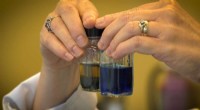
Think of it like this: Imagine a container divided by a membrane that only allows water to pass through. One side has pure water (high concentration), while the other side has a solution with dissolved solutes (lower concentration). Water will move from the pure water side to the solution side to try and equalize the concentration.
Key factors affecting osmosis:
* Concentration gradient: The difference in water concentration between the two regions. A larger gradient means faster osmosis.
* Membrane permeability: How easily water can pass through the membrane. A more permeable membrane allows for faster osmosis.
Osmosis is essential for many biological processes, including:
* Maintaining cell volume and shape
* Transport of nutrients and waste products
* Regulation of blood pressure
* Plant water uptake
Let me know if you would like me to elaborate on any of these aspects!