Here's why:
* Enzymes are biological catalysts: They speed up chemical reactions without being consumed in the process.
* Specificity: Enzymes are highly specific, meaning they usually catalyze only one or a small number of reactions involving specific molecules (substrates).
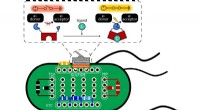
* Active Site: Enzymes have an active site where the substrate binds and the reaction takes place.
* Lowering Activation Energy: Enzymes lower the activation energy of a reaction, making it easier for the reaction to occur.
Examples of enzymes include:
* Amylase: Breaks down starch into sugars
* Lactase: Breaks down lactose (milk sugar)
* DNA polymerase: Builds new DNA strands
* ATP synthase: Produces energy (ATP) in cells
Let me know if you'd like more details about enzymes or their functions!