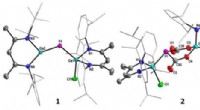
* Similar Electronic Configuration: Both carbon and silicon have four valence electrons, which are the electrons involved in bonding. This allows them to form four covalent bonds, creating a wide variety of compounds.
* Ability to Form Chains and Rings: Like carbon, silicon can form long chains and ring structures, leading to the creation of complex molecules. This is a key feature in the formation of organic molecules and is also seen in silicon-based polymers and ceramics.
* Similar Bonding Properties: Both elements can form single, double, and triple bonds. They can also form bonds with various other elements, leading to a diverse range of compounds.
* Abundant in Nature: Both carbon and silicon are relatively abundant in the Earth's crust.
* Basis for Technology: Carbon is the backbone of organic chemistry and life itself. Silicon is the foundation of the semiconductor industry, crucial for modern electronics.
While silicon shares many similarities with carbon, there are also important differences:
* Bond Strength: Silicon-silicon bonds are weaker than carbon-carbon bonds, leading to less stable and less complex structures.
* Reactivity: Silicon is generally less reactive than carbon and forms bonds with oxygen more readily.
Overall, the similarities in their electronic configurations and bonding properties make silicon the closest elemental analogue to carbon.