Iron
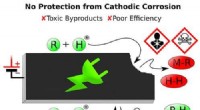
* What makes it rust: Iron rusts due to a chemical reaction called oxidation. In the presence of oxygen and water (often in the form of humidity), iron atoms lose electrons, forming iron oxide (Fe₂O₃), commonly known as rust.
* How it works: The oxygen in the air combines with the iron, and the water acts as a catalyst, speeding up the reaction. This process weakens the iron, making it brittle and prone to further degradation.
Lead
* What makes it tarnish: Lead doesn't "rust" in the same way iron does. Instead, it tarnishes, meaning it forms a dull, often grayish-white layer on its surface. This tarnishing is caused by the formation of lead oxide (PbO) through a similar oxidation process as iron, but it's less pronounced.
Nitrogen
* What makes it unreactive: Nitrogen is a very stable element and does not rust or tarnish. It exists in the atmosphere as a gas (N₂) and is unreactive because its atoms have a strong triple bond, making it difficult to break apart and form new compounds.
Carbon Dioxide
* What makes it unreactive: Carbon dioxide (CO₂) is a compound, not an element. It doesn't rust or tarnish because it's already in a stable, oxidized state.
Water
* What makes it unreactive: Water (H₂O) is a compound, and it doesn't rust or tarnish. It plays a vital role in the rusting of iron by acting as a catalyst, but it doesn't rust itself.
In summary:
* Only iron undergoes a true "rusting" process due to oxidation.
* Lead tarnishes, which is a similar process of oxidation but less pronounced.
* Nitrogen, carbon dioxide, and water do not rust or tarnish because they are either unreactive or already in a stable, oxidized state.