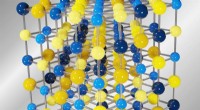
* Decreasing the temperature: Most solids dissolve more readily in warmer solvents. Lowering the temperature reduces the kinetic energy of the solvent molecules, making them less likely to break apart the solute's crystal lattice and pull it into solution.
* Increasing the particle size of the solute: Smaller particles have a greater surface area exposed to the solvent. This increases the rate of dissolving as more solvent molecules can interact with the solute at once. Larger particles have less surface area, leading to slower dissolution.
* Stirring less vigorously: Stirring helps dissolve solids by bringing fresh solvent into contact with the solute and carrying dissolved particles away from the surface. Less stirring means less fresh solvent and slower removal of dissolved particles, resulting in slower dissolution.
* Using a less polar solvent: "Like dissolves like" is a helpful principle in chemistry. A polar solvent (like water) will dissolve polar solutes (like sugar) more readily. A less polar solvent will dissolve a polar solute much more slowly.
Let me know if you'd like more details about any of these factors!