* "Like dissolves like": This is a fundamental principle in chemistry. Substances with similar polarities tend to mix well together.
* Oils are nonpolar: Oils are primarily composed of long chains of hydrocarbons, which are nonpolar molecules.
* Nonpolar solvents: Examples of common nonpolar solvents include hexane, diethyl ether, and toluene. These solvents are also made up of nonpolar molecules.
Example:
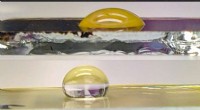
* Olive oil (nonpolar) will readily dissolve in hexane (nonpolar) but will not readily dissolve in water (polar).
Exceptions:
While most oils are nonpolar, there are some exceptions. Some oils might contain polar functional groups, making them slightly more soluble in polar solvents. However, the general rule still applies: nonpolar oils dissolve best in nonpolar solvents.