What They Are:
* Rearrangement of Atoms: Chemical reactions involve the breaking and forming of chemical bonds between atoms. This results in the rearrangement of atoms to form new substances with different properties.
* Energy Changes: Chemical reactions involve energy changes. Some reactions release energy (exothermic reactions) while others require energy input (endothermic reactions).
* Conservation of Mass: In a chemical reaction, the total mass of the reactants (starting materials) always equals the total mass of the products (substances formed). This is known as the Law of Conservation of Mass.
Types of Reactions:
* Synthesis Reactions: Two or more substances combine to form a new substance. Example: 2H₂ + O₂ → 2H₂O (formation of water)
* Decomposition Reactions: A single substance breaks down into two or more simpler substances. Example: 2H₂O → 2H₂ + O₂ (electrolysis of water)
* Single Displacement Reactions: One element replaces another element in a compound. Example: Zn + CuSO₄ → ZnSO₄ + Cu
* Double Displacement Reactions: Two compounds exchange ions or groups of atoms. Example: AgNO₃ + NaCl → AgCl + NaNO₃
* Combustion Reactions: A substance reacts rapidly with oxygen, producing heat and light. Example: CH₄ + 2O₂ → CO₂ + 2H₂O
* Acid-Base Reactions: An acid reacts with a base to form salt and water. Example: HCl + NaOH → NaCl + H₂O
Factors Affecting Reaction Rate:
* Temperature: Higher temperatures generally increase reaction rates because molecules move faster, increasing the frequency of collisions.
* Concentration: Higher concentrations of reactants lead to more collisions, increasing the rate of reaction.
* Surface Area: Increasing the surface area of a solid reactant (e.g., by grinding it) exposes more molecules to collisions, speeding up the reaction.
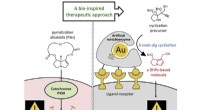
* Catalyst: A catalyst speeds up a reaction without being consumed itself. It provides an alternative reaction pathway with a lower activation energy.
Other Important Notes:
* Reversible Reactions: Some reactions can proceed in both directions.
* Equilibrium: A state where the rates of the forward and reverse reactions are equal.
* Activation Energy: The minimum energy required for reactants to start a chemical reaction.
Let me know if you'd like to know more about a specific type of chemical reaction, or any other aspect of this topic!