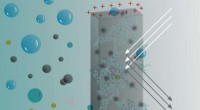
* Size: Water molecules are incredibly small. They are about 0.27 nanometers in diameter. To put that in perspective, a human hair is about 50,000 nanometers wide.
* Light Interaction: To see something, light must reflect off it and enter your eyes. Individual water molecules are too small to reflect enough light for us to detect them.
* The Nature of Light: Light waves are much larger than water molecules. Light can't "resolve" objects smaller than its wavelength, so individual water molecules are beyond the resolving power of our eyes.
What we actually see:
* Bulk Water: When you look at a glass of water, you're seeing the bulk of the water, which contains billions of water molecules. This bulk water reflects light in a way that makes it appear clear.
* Droplets: If the water is in the form of droplets (like rain or mist), you are seeing the surface tension of the water molecules, which forms a curved shape and reflects light differently.
* Evaporation: When water evaporates, you see the water vapor that rises into the air. This vapor is made up of tiny water droplets that scatter light.
To see individual molecules:
To see individual water molecules, you need specialized equipment like:
* Electron microscope: This instrument uses a beam of electrons to create images. Electrons are much smaller than light waves, so they can resolve very small objects, including molecules.
* Atomic force microscope: This instrument uses a tiny probe to scan the surface of a material and create an image.