Composition:
* Binary compounds contain only two elements, while polyatomic ions contain three or more elements.
Charge:
* Binary compounds do not carry an electrical charge, while polyatomic ions carry a negative or positive charge.
Formation:
* Binary compounds are formed when two elements react chemically and combine in a simple whole-number ratio. Conversely, polyatomic ions are formed when a group of atoms bond together and acquire a charge by losing or gaining electrons.
Stability:
* Binary compounds are generally more stable than polyatomic ions.
Solubility:
* The solubility of binary compounds and polyatomic ions in water and other solvents can vary greatly. Some binary compounds and polyatomic ions may be soluble, while others may be insoluble.
Ionic vs. Covalent bonds:
* Binary compounds can form through ionic or covalent bonding, depending on the nature of the elements involved.
On the other hand, most polyatomic ions are held together by covalent bonds, though they exhibit ionic bonding with the species they react with to form compounds.
Polyatomic ions behave as single units within chemical compounds and participate in ionic bonding or covalent bonding as a whole, contributing their collective charge to the overall electrical neutrality of the compound.
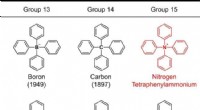
Examples of binary compounds include water (H₂O), carbon dioxide (CO₂), and sodium chloride (NaCl). Examples of polyatomic ions include hydroxide (OH⁻), carbonate (CO3²⁻), and ammonium (NH4⁺).