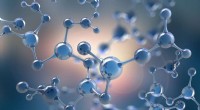
1. Ionic Attraction: NaCl is an ionic compound composed of positively charged sodium (Na+) ions and negatively charged chloride (Cl-) ions. When NaCl is added to water, the polar water molecules surround the ions, forming a hydration sphere. The water molecules are attracted to the ions due to electrostatic forces. The positive hydrogen atoms of water molecules are attracted to the negative Cl- ions, while the negative oxygen atoms are attracted to the positive Na+ ions.
2. Dipole-Dipole Interactions: Water molecules are polar molecules, meaning they have a positive end (hydrogen atoms) and a negative end (oxygen atom). These partial charges allow water molecules to form hydrogen bonds with each other. When NaCl dissolves in water, the water molecules surrounding the ions also form hydrogen bonds with each other. These dipole-dipole interactions contribute to the stability of the solution.
3. Van der Waals Forces: Van der Waals forces are weak attractive forces that occur between all molecules, including non-polar molecules. In the case of NaCl in water, van der Waals forces exist between the water molecules themselves and between the water molecules and the ions. These forces contribute to the overall cohesion of the solution.
4. Ion-Dipole Interactions: In addition to dipole-dipole interactions, water molecules also form ion-dipole interactions with the ions of NaCl. The negative oxygen atoms of water molecules are attracted to the positive Na+ ions, while the positive hydrogen atoms are attracted to the negative Cl- ions. These ion-dipole interactions further stabilize the solution.
The combination of these forces ensures the complete dissolution of NaCl in water, forming a homogeneous mixture known as a saline solution or brine.