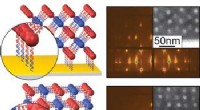
Ionic bonding is a type of chemical bond formed by the electrostatic attraction between oppositely charged ions. In the case of sodium chloride, the sodium ions are attracted to the chloride ions, and vice versa, resulting in a strong ionic bond.
The strength of the ionic bond in sodium chloride is influenced by several factors, including the charge of the ions, the size of the ions, and the lattice energy. The lattice energy is the energy required to separate all the ions in one mole of an ionic compound. The higher the lattice energy, the stronger the ionic bond.
In sodium chloride, the sodium and chloride ions have relatively high charges (+1 and -1, respectively) and small sizes. This results in a strong electrostatic attraction between the ions, which is reflected in the high lattice energy of sodium chloride (769 kJ/mol).
Therefore, the intermolecular forces present in sodium chloride are strong ionic bonds, which are responsible for the compound's high melting point, boiling point, and solubility in polar solvents.